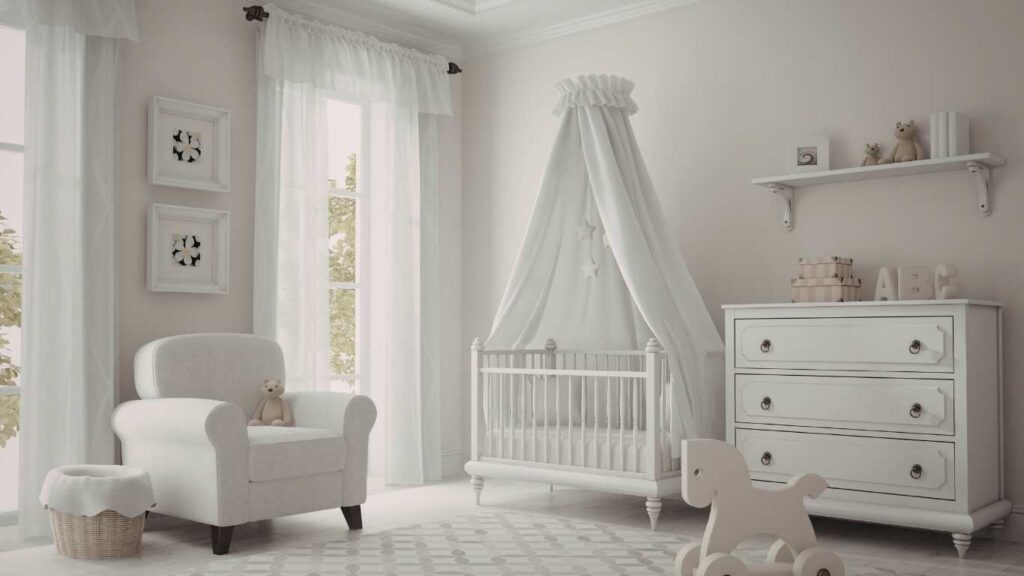
A thermostat set to 70°F does not guarantee every room in your house is actually at 70°F. Nurseries, especially those on upper floors or against exterior walls, can run several degrees warmer or cooler than the thermostat reading suggests. Since babies cannot regulate their own body temperature the way adults can, those few degrees matter more than most parents realize.
Why Stable Temperature Matters for Babies
Newborns and young infants lose heat through their skin faster than adults, and they cannot shiver effectively to warm up or sweat efficiently to cool down. The room does most of the regulating for them. The American Academy of Pediatrics recommends keeping the nursery between 68 and 72°F (20 to 22°C) throughout the year. Overheating is a recognized risk factor for SIDS (sudden infant death syndrome), which makes consistent room temperature a safety priority, not only a comfort preference.
A quick check: if you walk into the nursery and feel warm, your baby is likely too warm. Babies who are overheating may have flushed cheeks, damp hair, or a chest that feels hot to the touch.
How Your Home’s Structure Affects the Nursery
Most temperature problems in a nursery start with the house itself. Poorly insulated walls, aging windows, and gaps around door frames all let conditioned air escape and outside temperatures creep in. In winter, heat rises and leaks through an under-insulated attic. In summer, radiant heat from the roof works its way down into upper-floor rooms.
Last January, we noticed the nursery was consistently reading four or five degrees below the thermostat setting, no matter how high we turned the heat. We called one of the attic insulation companies in Lakewood, CO to take a look, and it turned out the attic above the nursery had almost no insulation along one section of the roofline. Once that was fixed, the room held within a degree or two of the thermostat for the rest of the winter.
Even without a full insulation project, smaller fixes help. Weatherstripping around windows, sealing gaps at baseboards, and hanging thermal curtains can reduce drafts and temperature swings in the nursery without a major renovation.
Tools That Take the Guesswork Out
A standalone room thermometer is the simplest upgrade. Place one near the crib (not on it) so you can check the actual temperature in the room your baby sleeps in, rather than relying on the hallway thermostat.
A smart thermostat with a remote room sensor goes a step further. Systems like the Ecobee let you place a sensor in the nursery and tell the thermostat to prioritize that room’s reading when deciding whether to run heat or air conditioning. This is especially useful at night, when the nursery door is closed and airflow from the central system is limited.
A cool-mist humidifier is worth considering during heating season. Forced-air heating drops indoor humidity, and dry air makes a room feel cooler than it is while also irritating a baby’s nose and skin. Keeping humidity between 40 and 60% helps the room feel more comfortable at the same thermostat setting.
Seasonal Adjustments
In winter, cold drafts near windows and exterior walls are the main problem. Keep the crib away from windows and check for air leaks around frames and baseboards. If the nursery is on an upper floor, make sure the attic above is properly insulated. A ceiling fan set to run clockwise on low speed pushes warm air that collects near the ceiling back down into the room. For a more detailed walkthrough of cold-weather preparation, including crib placement and layering tips, our guide on winter nursery preparation covers the specifics.
In summer, overheating is the bigger risk. Direct sunlight through windows can raise the room temperature well above the thermostat setting. Blackout curtains or UV-filtering window film reduce solar heat gain. If you use a fan, point it away from the crib so air circulates without blowing directly on your baby.
One Thermostat Does Not Fit Every Room
The most common mistake parents make is trusting the thermostat reading as though it applies evenly to the whole house. A nursery at the end of a hallway, on an upper floor, or against an exterior wall will almost always read differently. A $10 room thermometer or a smart sensor closes that gap and gives you the number that actually matters: the temperature where your baby sleeps.
You can find the rest of the topics we cover, from fabric care to safety standards, on our home page.